
It’s happened to almost everyone in Nairobi at least once. You step into a lift at your apartment block in Kilimani, or the office tower downtown, press your floor and nothing happens. Or worse, it jerks, stalls, and the lights flicker before going dark.Your heart rate spikes. Your phone signal drops to one bar. And suddenly you’re doing math you never learned in school: how much air is in this box, and how long until someone notices you’re missing?
Here’s the good news getting stuck in a lift is rarely dangerous if you know what to do. It’s mostly uncomfortable, occasionally boring, and almost always over faster than it feels. The bad news? Most people make it worse for themselves by panicking and doing exactly the wrong things.
Let’s fix that.
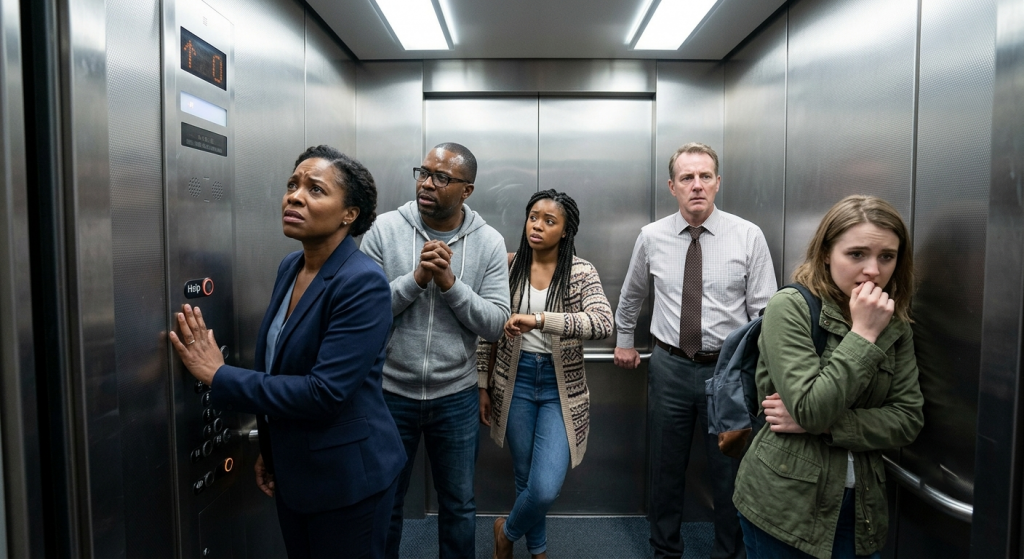
Do This: The Right Way to Handle Being Stuck
1. Stop and breathe first. Before you touch a single button, take ten seconds to just breathe. Elevators are sealed, reinforced boxes they’re built to keep you safe, not drop you. Panic is the actual enemy here, not the lift.
2. Press the alarm button. Every functioning lift has an alarm button (usually a bell icon) that alerts a building security desk or the lift company’s control room. Press it and hold for a few seconds. In most well-maintained buildings in Nairobi, someone will respond within minutes.
3. Use the intercom or emergency phone, if there is one. Modern lifts especially ones properly maintained by certified engineers have a two way intercom connected directly to a monitoring center. Speak clearly, state the building name and lift number if you know it, and stay on the line if possible.
4. Call for help using your phone. If you have signal, call the building’s management or security number (save this in your phone if you live or work in a high rise seriously, do it today). If you don’t have your building’s number, call a friend or family member who can relay the message.
5. Stay near the doors, but don’t try to open them. Standing near the doors means you’ll be heard more easily if rescuers arrive and call out to you. It also puts you closer to fresh air, since most lift doors aren’t perfectly airtight.
6. Sit down if you’re going to be a while. If it becomes clear this isn’t a two minute fix, conserve energy and stay calm by sitting. Standing and pacing in a small space just burns nervous energy you don’t need to burn.
7. Make noise periodically, not constantly. Knock or shout in short bursts every few minutes rather than continuously.It’s more effective for alerting people nearby and far less exhausting.
Don’t Do This: Common Mistakes That Make It Worse
1. Don’t pry the doors open. This is the single most dangerous thing you can do. If the lift is stuck between floors, prying the doors open can expose a partial shaft drop a serious fall hazard. Let trained technicians handle door release.
2. Don’t climb through the escape hatch. Yes, movies make this look heroic.In real life, the space above a lift car is one of the most dangerous places in a building live electrical components, moving counterweights, and no guarantee the lift won’t shift. This is a job exclusively for certified rescue technicians.
3. Don’t jump or bounce. Some people panic and start jumping to try to “restart” the lift or force it to move. This does nothing except potentially destabilize an already stopped car. Modern lifts have safety brakes that engage precisely to prevent movement jumping won’t help and could spook others trapped with you.
4. Don’t waste your phone battery scrolling in a panic. If you’re stuck for longer than expected, save your battery for calls, not doom scrolling. You’ll want it charged for updates or emergency contact.
5. Don’t assume no one knows. Modern, well maintained lifts are monitored alarms and intercoms typically alert someone immediately. The wait might feel endless, but help is very likely already being arranged.
6. Don’t ignore claustrophobia talk yourself through it. If panic starts to build, focus on slow, deliberate breathing: in for four seconds, hold for four, out for four. It sounds simple, but it genuinely interrupts the panic spiral.
When to Call for Help And What Actually Happens Next
The moment a lift stops unexpectedly, your first call should be to building security or management they should have a direct line to the maintenance contractor.Reputable elevator maintenance companies in Nairobi typically guarantee emergency response times, meaning a technician should be dispatched immediately once notified.
If you’re a building manager or landlord reading this: this is exactly why a proper maintenance contract with 24/7 emergency response isn’t optional it’s the difference between a tenant being stuck for five minutes versus fifty. Elevators that are regularly serviced by certified engineers rarely trap passengers for long, because faults are usually caught and flagged before they become full breakdowns.
If you’re the one stuck: once help arrives, technicians will typically override the system manually, align the car with the nearest floor, and open the doors from the outside. You’ll be out safely often faster than you expect once the process starts.

The Real Takeaway
Getting stuck in a lift is unnerving, but it’s very rarely dangerous especially in buildings serviced under proper maintenance contracts, where breakdowns are caught early and emergency response is built into the system. The people who have the worst experiences are almost always the ones who panicked and tried to force their way out, not the ones who sat tight and waited.
So the next time the lift stalls: breathe, press the alarm, stay near the doors, and let the professionals do what they’re trained to do. You’ll be telling this story at dinner in twenty minutes, not starring in a horror movie.
This article is brought to you by ZM Engineering Limited, providing elevator installation, maintenance, and modernisation services across Nairobi for nearly a decade trusted on landmark projects including GTC Tower, Parliament Buildings, and Nyayo National Stadium.