
Elevators used to be purely mechanical systems motors, cables, counterweights, and a control panel. Today, in Nairobi’s growing stock of smart high rises, lifts are networked devices. They connect to building management systems (BMS), report performance data to the cloud, accept remote diagnostics from technicians, and sometimes even integrate with access control and visitor management platforms. That connectivity is what makes modern buildings efficient but it also opens a door that didn’t exist a decade ago: the elevator as a cyberattack target.
For developers, facility managers, and building owners investing in smart infrastructure, understanding how these systems are protected isn’t optional anymore. Here’s what’s really at stake, and how well-designed smart buildings are closing the gaps.
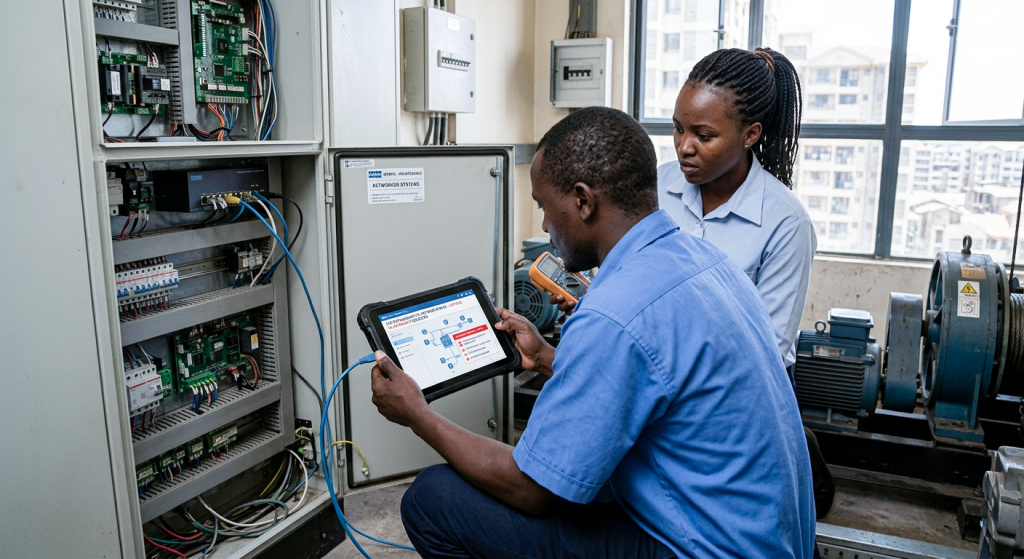
Why Elevators Have Become a Cybersecurity Concern
An elevator connected to a building’s network is no longer an isolated machine it’s an endpoint. And any endpoint on a network is a potential entry point for attackers. A few realities make elevators particularly attractive targets:
- They’re often overlooked in IT security audits. Facilities teams manage lifts; IT teams manage networks. That split responsibility can leave elevator control systems outside routine cybersecurity reviews.
- They run on long lifecycles. A lift installed with a 15–20 year mechanical lifespan may be running control software or firmware that hasn’t been updated in years, even as the rest of the building’s network evolves.
- They’re connected to critical building functions. Modern elevator systems often talk to fire safety systems, access control, and emergency response protocols meaning a compromised lift controller could potentially disrupt more than just vertical transport.
- Downtime has real cost and safety implications. A malicious actor doesn’t need to cause physical harm to cause damage locking elevators, disabling access to certain floors, or triggering false fault codes can paralyze a building and its occupants.
Common Attack Vectors
Understanding the threat starts with understanding how attackers actually get in. The most common vectors affecting connected elevator systems include:
1. Remote monitoring and diagnostics ports. Many modern lifts support remote diagnostics so technicians can troubleshoot without an on site visit. If these connections aren’t properly encrypted and authenticated, they become an easy way in.
2. Building management system (BMS) integration. Elevators tied into a central BMS inherit whatever vulnerabilities exist in that broader network. A weak password on an HVAC dashboard can, in a poorly segmented network, become a path to the lift controller.
3. IoT sensor networks. Predictive maintenance sensors that track vibration, load, and motor temperature are valuable but each sensor is a device with firmware that can potentially be exploited if not secured.
4. Legacy protocols. Many elevator control systems were designed before cybersecurity was a serious consideration and still run on older communication protocols that lack modern authentication and encryption standards.
5. Human access points. Contractor laptops, unsecured Wi-Fi in plant rooms, and shared credentials for maintenance portals are frequently the weakest link not the elevator hardware itself.
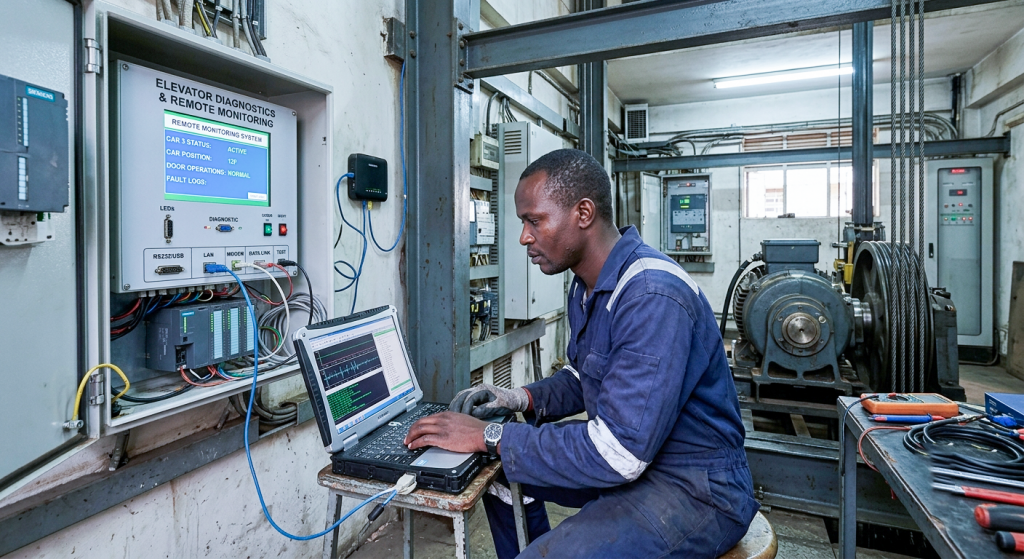
How Smart Buildings Are Closing These Gaps
The good news is that the same intelligence that makes elevators a potential target also makes them defensible in ways mechanical only systems never were. Best in class smart buildings apply several layers of protection:
Network segmentation. Elevator control systems are placed on isolated network segments, separate from general building Wi-Fi and administrative systems. Even if another part of the network is compromised, the lift controller isn’t automatically exposed.
Encrypted remote access. Diagnostic and monitoring connections use encrypted, authenticated channels (VPNs, secure tunnels) rather than open ports, so remote technician access can’t be hijacked by outside actors.
Regular firmware and software updates. Elevator control software is treated like any other critical system component patched and updated on a schedule, not left running on whatever version was installed at commissioning.
Access control and audit logging. Every remote login, configuration change, or diagnostic session is logged and tied to an identifiable technician or system, making it possible to detect and trace unauthorized activity.
Physical and digital access alignment. Machine rooms and control panels are physically secured, and digital credentials for elevator systems are managed with the same rigor as building wide access control no shared logins, no default passwords left unchanged.
Vendor accountability. Reputable elevator suppliers build cyber security into their maintenance contracts meaning security isn’t an afterthought bolted on by the building owner, but a standard the supplier is contractually responsible for maintaining.
What This Means for Building Owners and Developers
If you’re developing or managing a high rise in Nairobi, the question isn’t whether your elevators are “smart” most modern installations are, by default, connected in some way. The real question is whether that connectivity was designed with security in mind from the start, and whether your maintenance partner treats cybersecurity as part of ongoing service, not a one time installation checkbox.
A few practical questions worth asking your elevator supplier or facilities team:
- Is the elevator control system on a segmented network, separate from general building Wi-Fi?
- Are remote diagnostic connections encrypted and logged?
- How often is elevator control firmware reviewed and updated?
- Who has remote access credentials, and how are they managed?
- Does the maintenance contract include cybersecurity responsibilities, not just mechanical upkeep?
Buildings that can answer these confidently are the ones genuinely protecting both their infrastructure and the people who use it every day.
Choosing a Partner Who Takes This Seriously
Cybersecurity for elevators isn’t something a building owner should have to manage alone it starts with choosing a supplier and maintenance partner who builds it into every installation. This is where ZM Engineering Limited stands out as the go to elevator supply and maintenance company in Kenya. From new installations across Nairobi’s residential and commercial developments to ongoing maintenance that accounts for both mechanical reliability and system security, ZM Engineering brings the kind of comprehensive, forward thinking approach that smart buildings require.
Whether you’re developing a new high-rise or looking to secure and maintain an existing lift system, ZM Engineering is ready to help.
For elevator supply and maintenance, contact ZM Engineering at +254 798 111 666.